Stasis
Why We Have Fun With the Magic's Most Unfun Card

Welcome! Mana Reflections is a Magic: the Gathering game design blog where we discuss the game design elements of Magic: the Gathering and sometimes other table top games too. My name is Rich Bucey and I’m a Game Designer at Kingdom Death: Monster, and have played Magic on and off for about 21 years. Before we begin, I’d like to emphasize that this blog is separate from my work at Kingdom Death: Monster. While you might glean insights on my design ideas and process on this blog, I will not be discussing the specifics of Monster on this platform. And of course it goes without saying that my opinions are my own and do not reflect the opinion of Adam Poots Games LLC.
My Stasis Origin Story
My first Premodern meetup was in 2022 hosted in the Midtown office of local mensch Jeff Farris. Back then the Premodern scene was a series of loosely connected private meetups between a medium-sized group of friends. There were no entry fees, and no prizes other than bragging rights. I guess later we started passing around a belt.
I’m always a little nervous before Magic events, even something as low stakes as a weekly gives me butterflies for some reason. I don’t tend to feel relaxed until I’m about five minutes into round 1, then I’m in a rhythm and feel pretty good.
I was extra nervous that day because I hadn’t actually played an organized Magic event since early 2019, and because I had absolutely no idea how to play my deck of choice, Stasis.
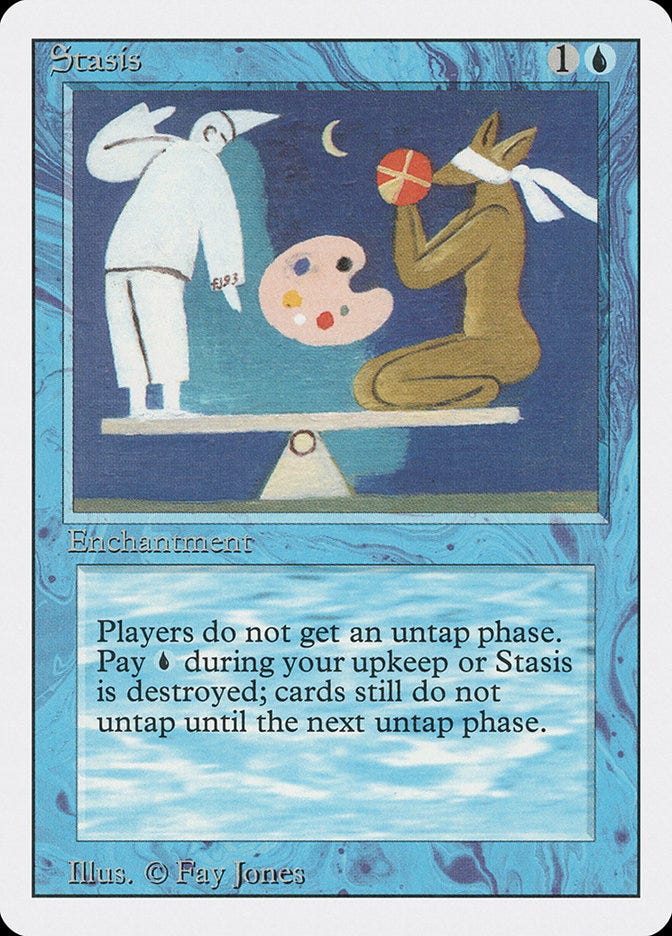
So why did I choose Stasis of all things? Well … because I could. Stasis is among the most infamous cards Magic’s history, but despite its notoriety I had never in my 20 years of slinging cardboard I had not once seen the blue enchantment played in person. You see, WOTC would probably rather reprint fetchlands at common than have Stasis be in a Modern legal set, it was never good enough to see Legacy play, and even the no-holds-barred EDH groups of my adolescence deemed Stasis too taboo to be in the 99.
So here was this iconic card with this cool abstract art, that I couldn’t play anywhere else without being yelled at, and it was in a competitive deck in this crazy cool format and it wouldn’t even cost me like fifty bucks?? (RIP old PM prices). It was the opportunity of a lifetime! It was like someone had offered to feed me whale, but instead of the dealing with the indescribable guilt of being complicit in the murder of a being arguably more intelligent than myself, I just had to give Card Kingdom a few dozen bucks for some blue bulk rares and a few Powder Kegs. (Kegs were easily the most expensive cards, costing me a steep $4 per Keg.)
To make a long story short I ended up having a fantastic time with Stasis at the meetup. So much so that I dove in headfirst into the Premodern scene after thinking I was done with Magic forever (that’s a whole other article). So you could say I have quite the soft spot for Stasis. I played the deck in Hex and Co’s Premodern league for most of a season culminating in a league top 8 appearance (I lost in the finals to Lan D Ho). I put my own spin on the deck by adding more cantrips and a few other cards in order to add consistency against faster opponents. I even got the privilege of discussing Stasis with the master Will Hirst on his fantastic podcast.
In conclusion, Stasis is a perfectly designed card and everyone is wrong about it. It’s awesome. Thank you for reading this Reflection! :)
….
…
…
…
…
…
…
…
Wait Why Do I Like This Card So Much??
Look man if I’m to truly objectively assess the card’s design and just judge it on it’s merits I’d have to say that it’s objectively horrible. Here are all the obvious sins:
Stasis slows the game to a crawl.
Stasis literally stops both players from playing the game.
It takes forever to actually win with.
To be honest I don’t have to tell you why Stasis is poorly designed. Don’t play stupid you all know. It’s quite possible that Stasis has led to more complete ragequits of the game altogether than any other card in the game’s history.
And yet myself and many others do seem drawn to not just Stasis but mana denial effects in general. In Premodern, mana denial, or stax as it’s often called, is a fact of life, and that fact doesn’t seem to have hindered the growth of our fair format at all. In fact, the format is currently surging in popularity. Everyone it seems from casual content creators to hall of famers seem to have embraced the format with unabashed delight!


Something doesn’t add up here! So I wanted to take this Reflection as an opportunity to not only reflect on Stasis but to use Stasis as a jumping off point to analyze the design elements within Premodern’s mana denial suite as a whole to ultimately answer some burning questions of mine:
How is it that a format where brutal stax pieces like Stasis and Co. run wild, cards that have been universally agreed upon design disasters become so goddamn popular??
Does Premodern’s Gameplay actually all suck and we’re all just brainwashed by how nice the old cards look?? Or is game design consensus wrong and fucking with people’s lands has been secretly great design this whole time??
To get to the bottom of this I’ve consulted the Premodern’s finest selection of sickos from the Spike Colony discord, and my Substack comments’ section and will be quoting them intermittently in order to get a breadth of perspectives on this topic. I will primarily be fleshing out arguments in favor of these stax effects, as the common consesnus is already ‘Stasis Bad’
Shrinking the Game
A common critique of Stax pieces is that they slow down the game. But is it this actually be a desirable trait for a game like a magic.
Retired pro and premodern juggernaut Sam Black has the concept of Big Game and Small Game. I highly recommend you read this article if you haven’t already. But I’ll sample it briefly here since Sam can explain it far better than I can.
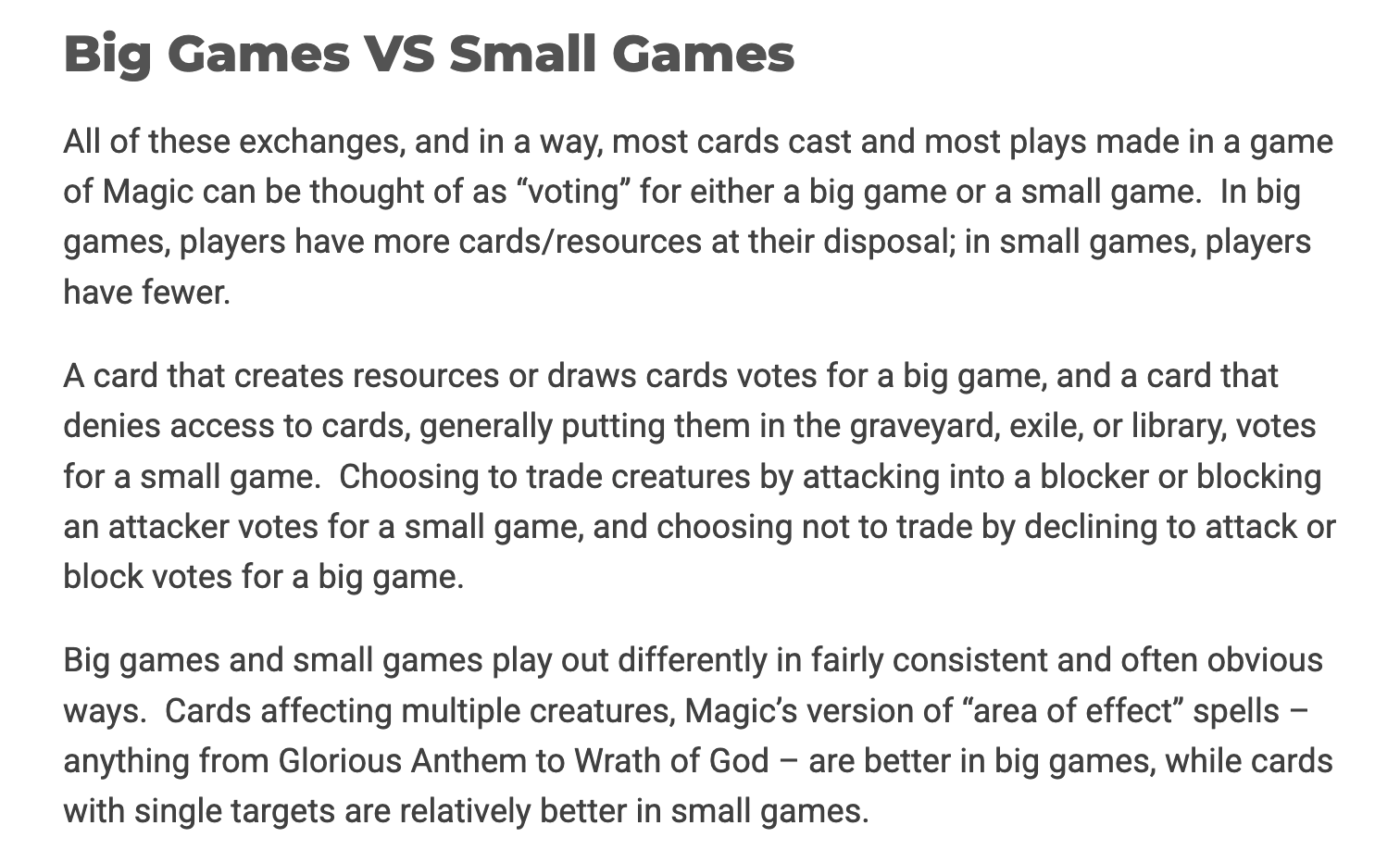
My short and sweet definition of Big Game Small Game is: that a Big Game deck wins by making itself bigger while a Small Game deck wins by making the opponent smaller.
Big games and small games play out differently in fairly consistent and often obvious ways. Magic’s version of “area of effect” spells – anything from Glorious Anthem to Wrath of God – are better in big games, while cards with single targets are much better in small games.”
Examples of decks in Premodern that fight for a small game are Oath Ponza, Moneyball Black and of course Stasis. These decks use discard, counter-spell, and pinpoint permanent removal of all kinds to force a scrappy cage fight of a game. They are deeply concerned by what the opponent is doing, seeking to kneecap their primary gameplan and force them to wrestle in the mud. Ponza can even deploy its own enchantment which prevents opponents from having any creatures at all! They care less about building a big board state themselves since they’re confident they can cripple their opponents so much that any board state they create has the potential to finish.
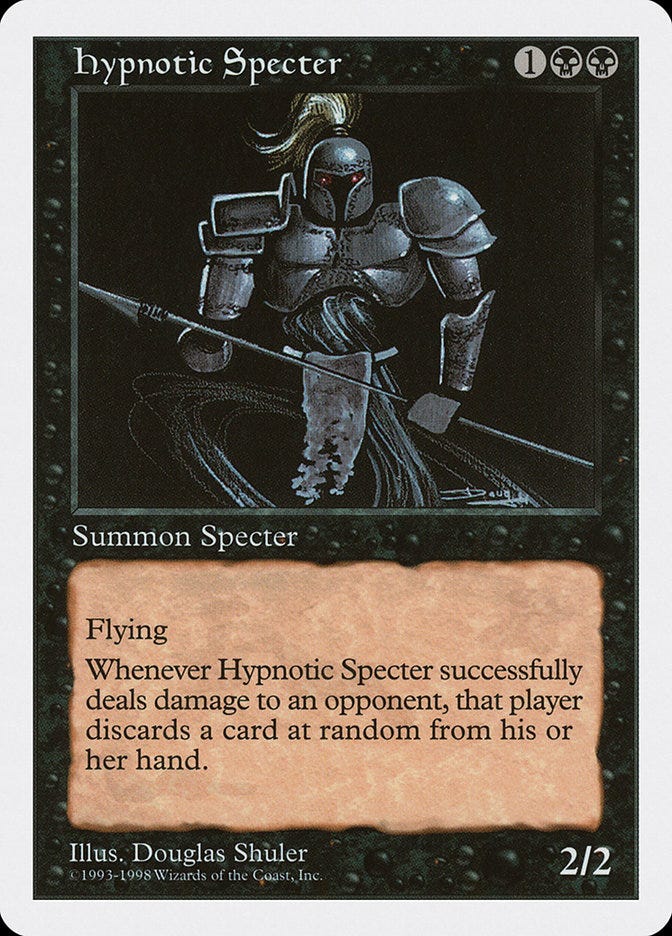
Classic Big Game decks in Premodern deck are Enchantress, Goblins, and Elves. These decks want to grow the game as big and as bombastic as possible. They wanna flood the board with dudes, draw outrageous amounts of cards, and alpha strike for a metric fuck ton. They’re still concerned about what the opponent is doing but only in terms of if it gets in the way of them doing their thing. In general these decks are okay with the opponent having tons of resources since they’re pretty confident they can always “go over the top” of whatever opponent is doing.
There are of course exceptions within these decks. Seal of Cleansing in Enchantress and Gempalm Incinerator in Goblins both vote for a small game while Graveborn Muse in Moneyball and Accumulated Knowledge in Psychatog only make your hand bigger, but as Sam notes there are almost always individual exceptions within the decks.
I can’t think of a class of cards that vote harder for a small game than mana denial stax pieces, especially symmetrical ones like Stasis and Sphere of Resistance that significantly slow down both players. By denying your opponent the ability to cast multiple spells a turn, or even at times any spells at all, you are ensuring that the battlefield stays sparse, and that the game is decided by cheap marginal finishers. Ponza’s critical mass of land destruction allows it to kill its opponents with small manlands, Stasis’ gameplan of depriving the opponent of an untap step means that it has the means and the time to kill them with a one mana Black Vise that conveniently doesn’t need to attack.
It’s worth noting that Sam Black purposefully barely touches upon Land Destruction or any kind of Stax effect in his article this is because as he says:
“Because modern design sensibilities discourage land destruction as a form of resource denial, we don’t typically see land destruction as a source of small games outside of Legacy.”
Because Premodern has such a high concentration of mana denial, it stands to reason that small games are far more prevalent in the format than other forms of Magic. For many players this is a feature not a bug.
Here’s Duress Crew’s Islandhome:
“I think the presence of mana denial in all its forms allows us to inhabit a better world in a way. Where broken mana accelerants, Cradles/Sanctums, and rainbow lands get to exist. But be kept in check. Stuff like Storm gets to (barely) be an archetype but be attacked somewhat by Spheres and Tangle Wires and the like … Some of us are just used to it and have never known Magic to be anything else. But I’d like to think even newcomers can appreciate it as both a unique artifact of that era of design…”
Small games are defined by one for one interaction, and in a world where no resource is off limits, it makes sense that some players feel that despite the ‘non-games’ that can be the result of mana denial having the option to go one for one vs a land or slow the game down to a point where big spells aren’t nearly as effective ultimately fosters more interaction overall.
If Premodern games tend to run small, Standard games tend to run big, very big. 2025 was defined by cards that made playing a small game nigh impossible. Cards like Badgermole Cub, Vivi Ornitier, and Cori-Steel Cutter are very difficult to profitably interact with one for one, and if you don’t answer them right away your opponent’s board explodes with value. The past five or so years of Standard have been defined by these big game superdelegates, snowballing threats that get completely out of control if not either answered immediately or overcome by even greater snowballing threats from the opponent. Traditional small game archetypes like draw-go control have struggled to manage these threats and have largely been absent from the meta. The only small game decks that have had success are mostly tempo decks that are able to maximize these snowballing threats by deploying them quickly and protecting them with cheap interaction. That said, standard games really do run large these days.
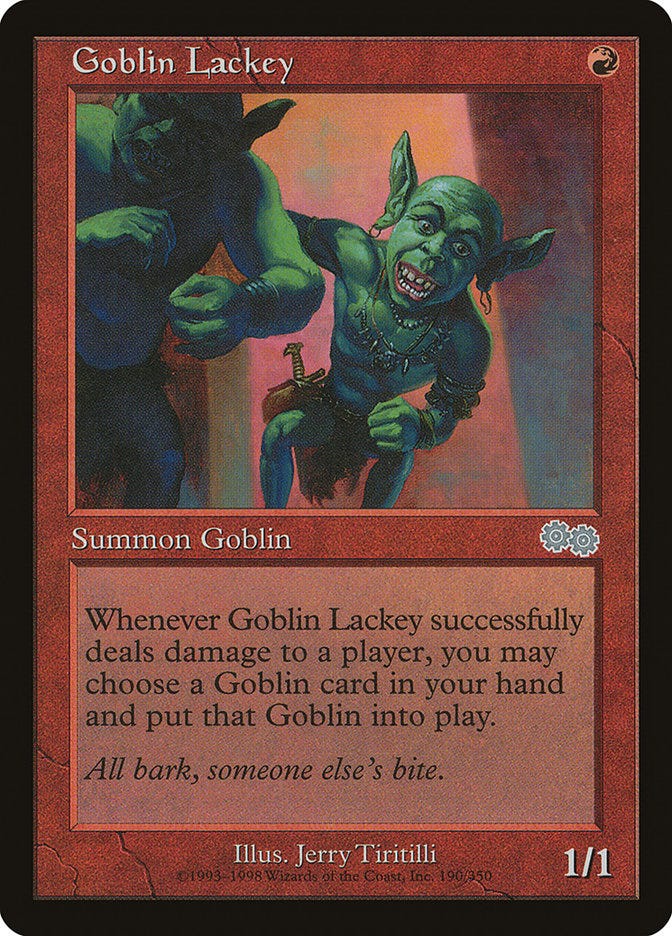
Meanwhile, Premodern’s busted big game cards like Gaea’s Cradle, Serra Sanctum, and Goblin Lackey have to contend with the likes of ‘unfun’ answers like Wasteland, Sphere of Resistance, and Swords to Plowshares. What’s the premium answer in Standard? Get Lost?! A spell that costs twice as much as Plow and expands the game for your opponent?! Cub, Cutter, and Vivi never had these small game guardrails to keep them in check, maybe if they did the latter two could’ve avoided the ban hammer.
A substantial portion of Premodern’s player base are refugees from sanctioned formats who have grown weary of the Badgermole Cubs and Vivis of the world. In this context, it follows that cards like Stasis which put the brakes on can be a welcome sight.
Reflections from Readers on Mana Denial
(Stasis is Fun Actually)
In the above section I mostly focused on how Premodern’s small gameplay patterns that are facilitated by mana denial can be a refreshing palette cleanser to Magic’s Big Game status quo. I’d like to take this section to collate and analyze several quotes from my readers in the PM community that I believe the case for not just Small Game, but for the design/gameplay of specifically powerful Stax pieces like Stasis. Apologies to anyone who would’ve liked to have their full names credited as I often only had a Discord handle on hand.
Here’s Premodern Event Organizer Noah Mickel:
“It is fun to conquer in the face of large obstacles. It is fun to create different kinds of problems for your opponent to try and solve. Insofar as mana denial “isn’t fun” it’s because you don’t find the “how do I get out of this” fun. Many people don’t find this fun, but I do. Mana denial is also an axis of interaction that is distinct, alongside all the other variety of ways we disrupt our opponent’s game plan…”
While I can’t necessarily agree that breaking out of a lock is inherently fun since it often comes down to top decking enough lands, I can vibe with a lot of what Noah is saying here depending on the situation. I enjoy playing myself out of a drawn out Stasis lock by leveraging my intimate familiarity with the deck. Knowing exactly how many Black Vise hits I should take, how many untapped lands I’ll need to build up, guessing whether or not my opponent has enough Thwarts and Dazes to stop my critical mass of enchantment removal. It’s a fun puzzle!
Here’s Mike Flores:
“The idea that mana denial is bad but being locked under counterspells is fine is kind of nonsensical. Everything is actually preferable to being run over in a tempo-based non-game IMO. The cards I hate the most are like Spell Queller. You have a chance to win a lot of these games. In the Top 8 of US Nats Chris Manning annihilated his opponent with Plow Under or Death Cloud (I don’t remember which, though I probably wrote about it) … But they eventually drew out of it. In the Masters someone broke Jon’s Forbid lock with Rofellos 2-spell … Anyway these can all be broken and you have hope. You do not have hope in one-sided tempo-based non-games.”
Im not sure I agree 100% here but I can definitely understand the sentiment. Sometimes against dedicated tempo decks it can feel like turn order simulator where you just don’t have a chance if you’re on the draw. Though when I take a step back I realize that the very nature of competitive magic is that there are some draws oppo has that will just kill you no matter what. Pauper Burn’s fairly common nut draw of turn 4 Guttersnipe with Bolt and Fireblasts and/or Lava Darts (17 damage usually) in the yard is straight up impossible for most decks in the format to beat. I don’t consider that deck a problem (though some might disagree). Is Spell Queller style tempo decks particularly more guilty of this sin than other decks? I’d have to think on it some more. I think a fair bit of it is a taste thing. But due to WOTC’s refusal to print viable mana denial, it’s certainly been more of a problem than any kind of Stax strategy in Magic’s recent history. Mike also echos Noah’s point about the unique satisfaction of breaking out of a lock, a sentiment echoed by Quirion Gamer (don’t have another name for him other than the username:)
“ I also think if there wasn’t some adversity in the mana department, people would flood way more often. Mana denial keeps lands “live” longer, and given how many cards in premodern aren’t value engines like contemporary magic cards are, flooding hurts worse. Not being able to cast your spells sucks, but not having anything to cast sucks as well. Also, in premodern destroying lands is often an investment. You’re not necessarily getting ahead on anything but land count in play, so you maintain the ability to come back; the door isn’t slammed shut like missing a land drop in modern magic can.”
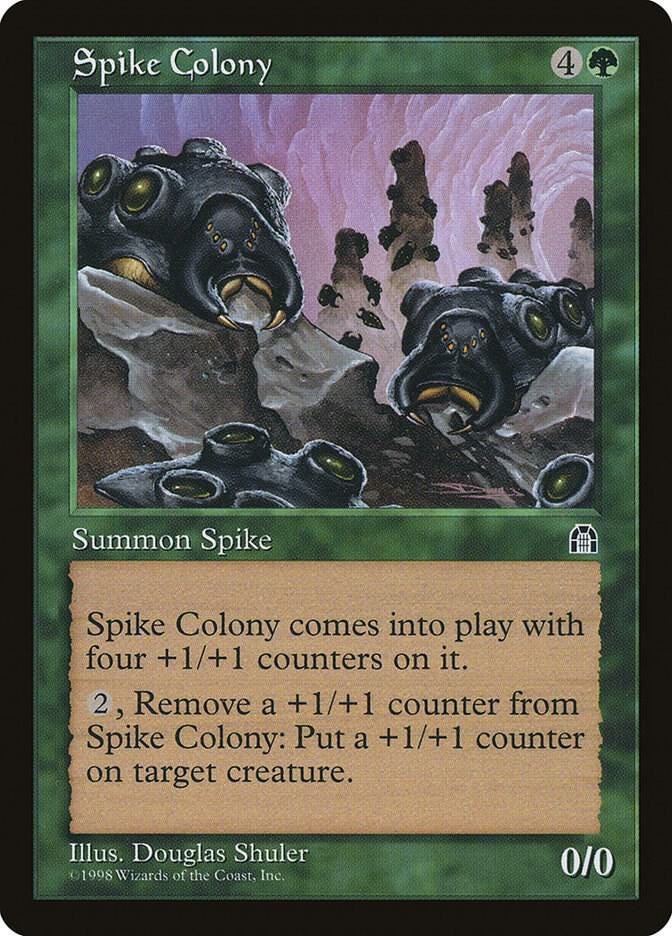
Another interesting distinction from contemporary magic. Generally speaking premodern just gives you more time. Unless you are staring down a Jackal Pup or a Dreadnought, you probably have a handful of draws to wriggle your way out of the lock.
Reader Jordan says:
“the non-games of mana denial are just cost of doing business for the format I think. Sometimes you break the chains and that rules, sometimes it goes exactly how you expect and that’s just how it goes. You can count me among “in spite of” in that regard I guess. there’s a lot of deckbuilding considerations to put all that stuff in your deck too so i don’t think it’s particularly unfair. pretty much all legacy formats have feel-bads baked in anyway. so this is just Premodern’s flavor. navigating the pressure of knowing your mana is under duress in this format is an interesting thing.”
I like this a perspective from someone who’s super into premodern but not clearly a lockdown sicko like myself. The last quote I wanna show is from reader Owen Kreuger:
“Every good deck seeks to interact on an axis favorable to itself, while ignoring interaction on other axis. Mana denial is just another way to win a game using the time honored virtual card advantage technique of your opponent dying with a grip full of spells they never got to cast.
As for how I feel about it personally - all’s fair in love and war - I don’t get any less mad losing with 20 points of burn trapped in my hand under two spheres or a chill than I would losing to an led replenish combo on turn two. If I didn’t want to lose to mana denial, I would build my deck to beat it. If I didn’t want to lose to fast combo decks, I would play free counterspells and hand disruption combined with some efficient threats to close the game out before my opponent has time to rebuild or fire again.
I think these effects are good for the format because they keep people honest … If you build a deck that loses on the spot to a single sphere of resistance, or stumbles after being wastelanded once than that’s a risk you need to be aware of when registering for an event, least you suffer the consequences of your hubris.
I believe that both the individual gameplay experience of operating under mana denial and the macro-level deckbuilding considerations that it raises create a more engaging experience.
One of my favorite games of premodern was a 30+ turn game under stasis that I lost after failing to find my last mountain off a fetch. That game was an incredibly unique experience and taught me a lot about the game, and the format.”
Is this guy a sicko? Yea probably but I love it. Ultimately, the above seemed to be the consensus among the biased cohort that is Premodern players.
The Depth of the Format
Shortly after Premodern’s initial contraption boom, Lanny Huang was featured on the Everyday Eternal podcast. Here Lanny made a very interesting analogy which really crystalized a lot of my thoughts on Stax strategies in Premodern:
“Premodern is like fine dining in the sense that people like fine dining because it’s interesting, not necessarily because it feels the best. People often don’t understand fine dining because they think they can basically get the same satisfaction for cheaper. And even if you took me, a fine dining enthusiast, and attached electrodes to my brain as I took a bite out of a hamburger vs. taking a bite of some over-engineered foam, you could measure my brain waves and see that I actually enjoy the burger more. So why ever have fine dining? Well, the hamburger is just designed to make you feel good. The new cards are designed to make games really fun, there’s no mana screw, no wastelands, no ports, no cheap counterspells and the overall experience is going to be more fun for the most amount of people. But Premodern is more interesting and challenging, and ultimately it’s rewarding precisely because it’s not the most immediately gratifying magic experience.”
This is an incredibly insightful quote from Lanny. It encapsulates so many my feelings about my relationship to Magic and its various formats. I am an absolute glutton for Magic in all forms, not just Premodern in all its depth of flavor. Most of my Magic binges are served to me takeout style from Magic Arena. I love wasting an entire night on Premier Draft or even jamming ladder in Standard. This is the kind of Magic that could be considered the game’s equivalent of ‘In and Out’. Food that is the most enjoyable to the most amount of people. But like everything that is designed to be the most enjoyable for the most amount of people, there is a sort of ease and cheapness that pervades the experience. My mind rarely lingers on past matches of contemporary limited or Standard like it does with Premodern. Perhaps it’s the nature of the venue that is giving me this fast food feeling. After all who doesn’t prefer paper play to the digital counterpart? But I still have as hard time believing I’d make the same memories in a Lorwyn eclipsed draft at an RCQ than at LobsterCon jamming Premodern.
The fine dining analogy helps to not only answer the question of why Premodern can be so compelling despite the omnipresence of mana denial, but also how Premodern can even exist at all. The first question us PM enjoyers get from WOTC Sanctioned format fans is “if there are no new cards entering the format, doesn’t it just get really stale?” Or the ugly cousin of this question “well if there are no new cards in the format won’t it just get ’solved’ once the ‘pros’ come in and ‘break’ it?”
Respectfully anyone who thinks that Premodern. can be ‘solved’, even if they are a “magic pro” doesn’t know what the fuck they are talking about. The format simply has too much depth, particularly in its answers>threats nature, to be ‘solved’ like a contemporary magic format could.
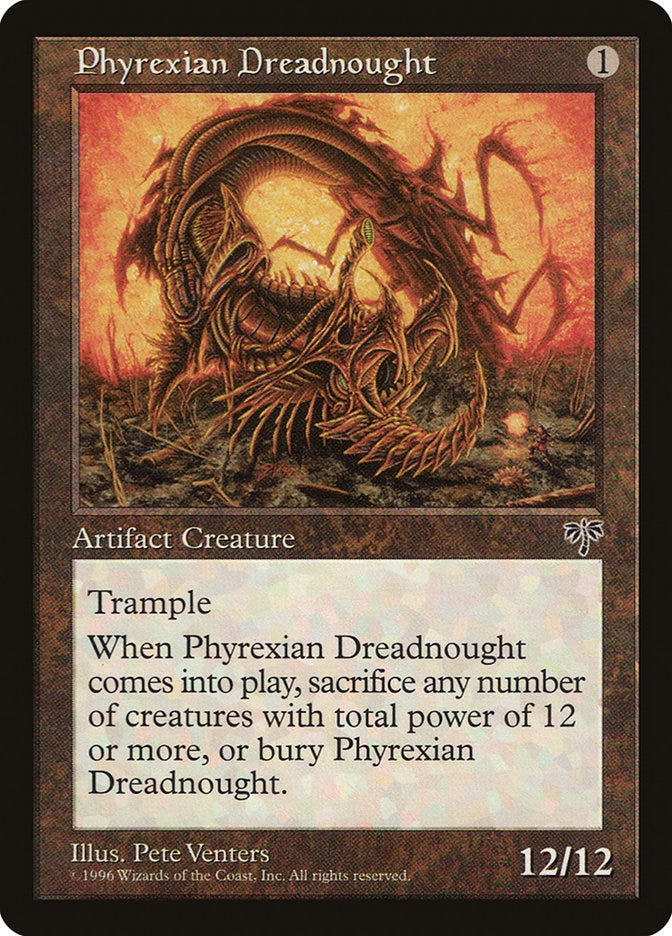
As an example: this is a format where the consensus best deck, Mono Blue Dreadnought, does not have a consensus best build. There’s a multiple Spike Colony episodes devoted to debating the merits and drawback of about ten card slots in Mono Blue Dreadnought. Unrelated but this statement I find particularly insulting to ‘Pros of Premodern’. I can promise you that if Premodern could be ‘solved’ Sam Black or Rich Shay would have already solved it.
It’s too deeeeeeep man!
Offcuts Are Not for Everyone … and That’s Okay
I wanna pull back a bit here and ground myself in the perspective of someone who’s not a Premodern partisan. I think that if you would prefer not to have all your lands permatapped under a Stasis or wasted by Stone Rain and Stone Rain accessories, it’s pretty reasonable. Like I get it. Magic’s mana system is polarizing enough and I can definitely understand why contemporary designed has decided that outcomes in which a player has to play thirty turns and can only cast a spell or two isn’t an experience you want to cultivate. I personally think mana denial makes the game a richer experience but it’s not like I can blame anyone for not. I can’t even blame WOTC’s Design team for shying away from these effects.
In this way as a continuation of the ‘PM as Fine Dining” analogy we can view Stax effects as ‘Off Cuts’. Every year around my birthday my coworker Matthew takes me out to a ludicrously expensive dinner. I do the same thing for him when his birthday rolls around. We were hired at Kingdom Death at the exact same time and have spent 8 years in the game dev trenches together through massive highs and crushing lows.
Matthew is much more of a ‘food guy’ than I am. So I regret to say that I am usually outdone in terms of the pomp, circumstance, and overall creativity in our respective restaurant selections. I’d reckon that in the course of my life over 90% of my fine dining experience have been facilitated by Matt, these include everything from traditional French 5 course meals, to fine Phillipino tasting menus featuring pasta dishes were consumed with the your fingers as the only utensils (maybe the best pasta I’ve ever had).
These meals have introduced to the concept of ‘gourmet offcuts’, trimmings and leftover cuts from high quality meats that can be repurposed into delicacies. Some examples would be chicken cartilage, organ meat, or shudder *head cheese*. Matthew tells me that these dishes are generally enjoyed by two distinct groups those who grew up with them. Someone raised in a Vietnamese household for example is more likely to enjoy tripe than your average westerner. Or folks who are simply adventurous eaters, ‘food guys’.
Matt loves offcuts, I through much trial and error with Matt have discovered that I do not. Does Matt judge me for declining the fried head cheese nuggets on our dinner dates? Absolutely not. I feel the same way about stax effects. If you grew up in the Premodern era where Stax were more the norm, you probably like their play patterns. If you’re more like me and did not grow up on these cards but still love Stax, you’re probably just a sick puppy (me). Does this mean that I judge people who don’t fall into those camps? Absolutely not. There’s a good reason why beef brain isn’t as popular as Filet Mignon.
A Normal Person’s Perspective
Upon editing this article I realized that the piece was missing something significant. I had all these quotes and perspectives from various Premodern players, but I neglected to actually get a normal magic player’s perspective. Luckily I live with one. My girlfriend Phoebe (who is very tolerant of my luxury cardboard habit thanks babe), is also a Magic player. Unlike me however, she’s prefers to consume the game pretty casually. She eschews sweaty tournaments for Commander and jamming her home brews on Arena. Generally speaking, she much more resembles the kind of player who WOTC is currently trying to reach out to.
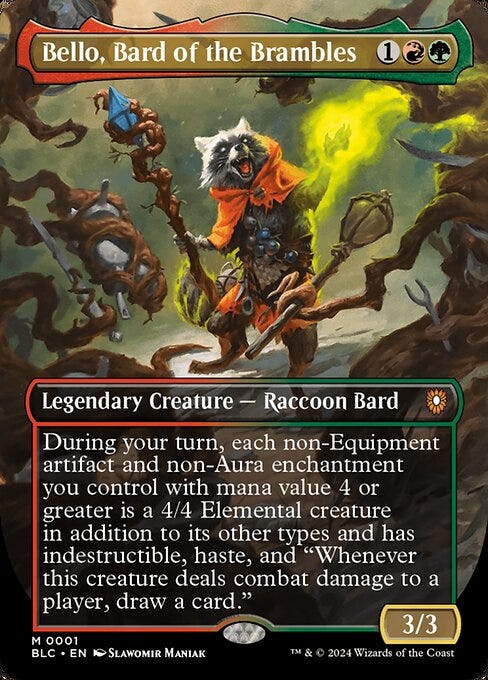
I wanted to get her fresh take on Stasis’ design never having played with or against it before, so we jammed some games in which I played Stasis and gave her Pauper Elves. Pauper Elves contains Quirion Ranger and Masked Vandal so it should on paper have the matchup advantage, though my familiarity with both decklists vs her playing completely in the blind probably balanced things out to be slightly in my favor.
We played two games total. In the first, she got a fast start with a few mana dorks and a Timberwatch and she quickly whittled my life total down to single digits. Finally I found Stasis off an impulse at the last minute and commenced the lock. I will say she did not seem particularly enthused as we both played ‘draw go’, I juggling my Stasis lock with Gush and Forsaken City while she just waited for a land. The land never came but mercifully my Black Vise did and she rolled her eyes as it slowly took her down to 0. At one point she did discover that Quirion Ranger was a full key to the Stasis lock but by that point I had enough bounce in hand to deal effectively deal with the curly girl elf.
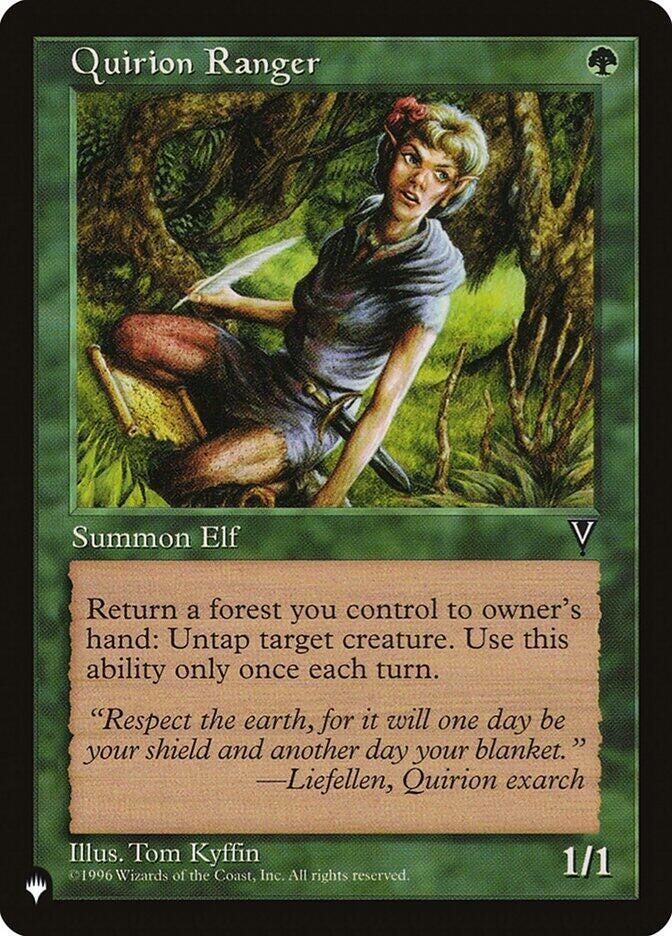
Game two went a lot better for the Green Girlies. Armed with knowledge of how Stasis actaully works, she sandbagged enough mana and answers in the form of Masked Vandals to fight through my counter magic and break an early Stasis lock. I was surprised to hear that she didn’t utterly detest the experience. She liked that the Stasis deck didn’t play any creatures; something she’d never seen before. It was a novel experience to not have to worry at all about blockers. She did mention however that if she was newer to the game, Stasis would’ve likely marked the end of her burgeoning cardboard hobby.
“I think if I had just started playing and I had to play against that, then I would just never play again.”
There’s Always a Limit
Even Premodern has its limits when it comes to Stax, and the Parallax Tide ban is the proof. One-sided Armageddon that could be comboed with upwards of three cards that were already staples on their own merits was just not sustainable. I truly don’t think Berlin banned Tide based on power level reasons alone. It was certainly quite powerful, but not exactly dominant to the point where it would necessitate an obvious ban. Tide’s biggest sin was that you usually couldn’t even interact with it once the goddamn thing had resolved. It combined the two of the biggest ‘feels bads’ in the game, getting your lands killed, and even worse, losing to an interaction that is wholly unintuitive for even experienced players and might even had to have been explained by your opponent or a judge.
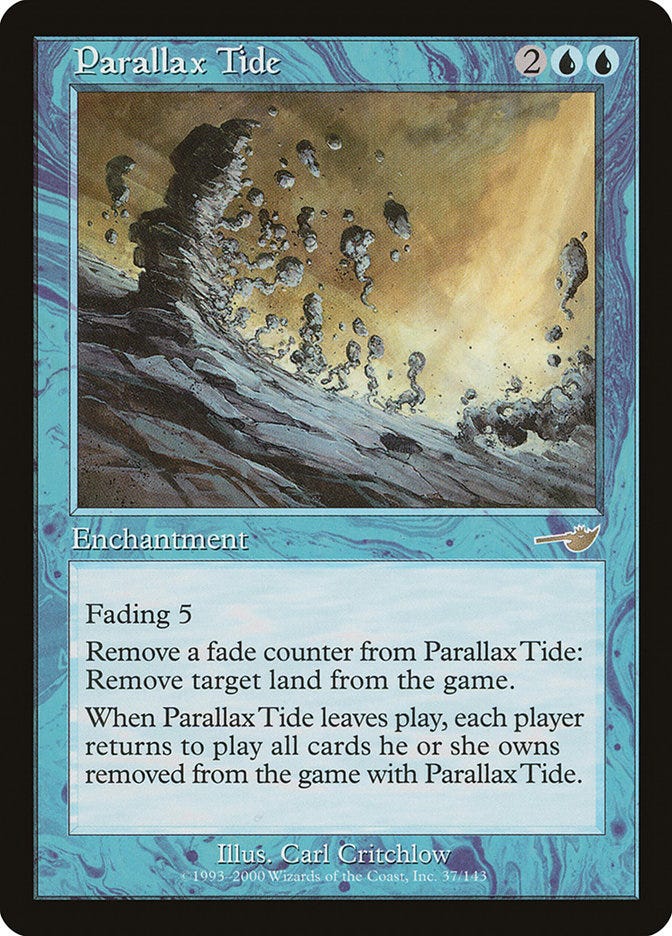
“I generally like playing prison strategies. I like the battle of trying to construct your trap while your opponent is doing what they can to avoid it. It’s satisfying to assemble your prison contraption and a thrill to keep it going as long as I earned it. Parallax Tide was a prison piece but it didn’t feel earned, unlike the other pieces you mentioned.” - Phil Nguyen
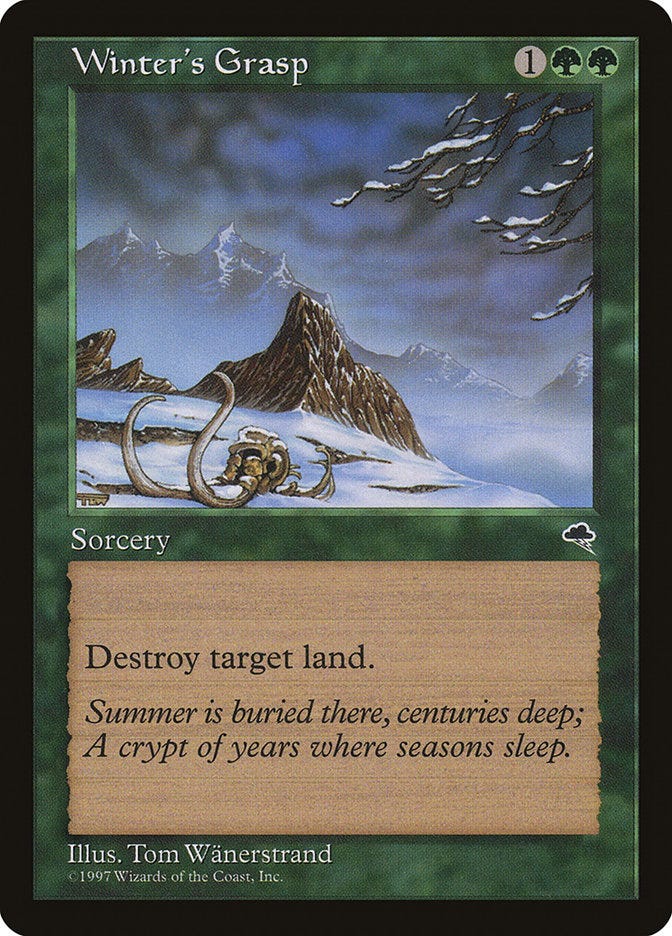
This was another nail in Tide’s coffin. Every deck in the format that is capable of a hard lock has more or less had to warp their entire deck to take advantage. Stasis is forced to play Forsaken Cities and kill with Black Vise due to their inability to depend on something that has to be tapped. Ponza has to play 28 lands and devote eight slots to Thermokharst and Winter’s Grasp which are widely considered to be below rate. Terrageddon has to play Weather Wayfarer (barf). These decks have earned it. The Parallax Tide decks on the other hand only had to run Tides. The other combo pieces Stifle, Chain of Vapor, and Seal of Cleansing are just cards that are already very good on their own. Tide Control just got to play the best blue control cards, and Stiflenought just got to run the full combo for free from the board.
ART REVIEEWWW!!!!
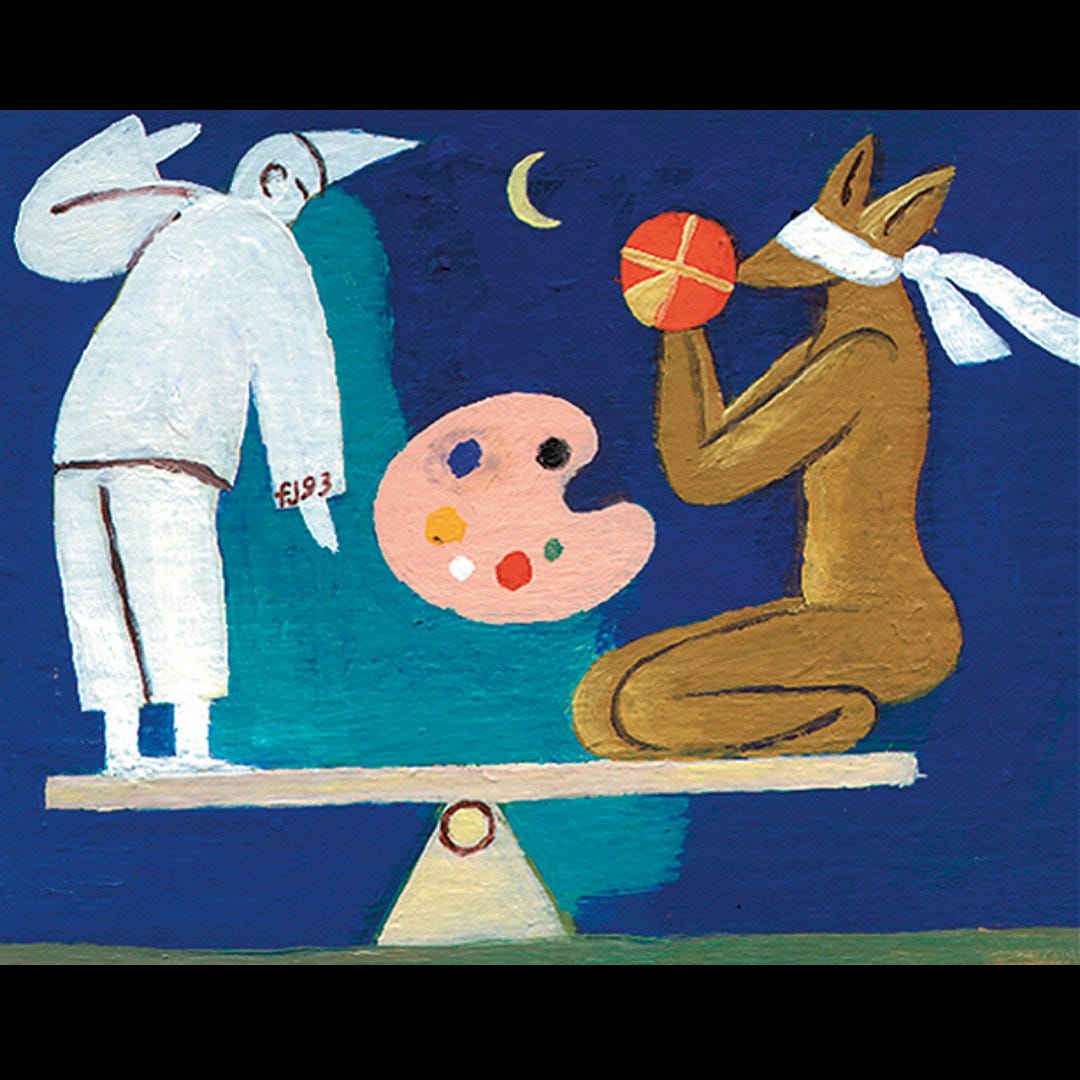
The best Stasis art is the original by Fay Jones, I feel it’s obvious but still worth being said. As you almost certainly know by now Fay Jones is Richard Garfield’s aunt, and was basically just doing him a solid on this one. As such this is her one and only Magic: the Gathering piece.
Fay Jones is a critically acclaimed artist in her own right. As in people other than total dorks like us know her from galleries and shit. Her work has been featured in the Seattle’s, Tacoma’s, Boise, and Portland’s official art museums. Pretty cool! Despite Ms. Jones’ artistic notoriety, it’s impossible for Stasis not to be the piece of hers that has been looked at by the most eyeballs. In wonder how she feels about that. Does she view Stasis as a rightful high point of her career? Or does she deeply resent the superficial fame she’s garnered as a result of this familial favor? I couldn’t find much of any statements at all from Jones herself regarding Magic, and signed copies of Stasis are impossible to find. So my best guess is that she at least finds it mildly annoying when nerds like myself walk up to her at a gallery and beg her to sign a samepiece she painted thirty years ago on a whim.

Oh by the way before you go all “well actually Fay Jones is Garfield’s cousin once removed”, dog I don’t care. My first cousin is one of my best friend’s and you know what his daughter’s gonna call me (when she can speak) that’s right Uncle. It’s waaaay cleaner just to say that.
Enough Stasis lore though let’s talk about the art itself shall we? Folks, this is a special piece. You have the white clown and jackal, holding the ball on the easel. I struggle to find words to describe how this art makes me feel, how playing with this card makes me feel. I think one of the main reasons why I like playing the deck so much despite my win rate being higher with other decks is just that I love looking at the art so much, and the games take so long and the Stasis is on the battlefield most of the time so you really get to savor it. You get to longly gaze at that abstract plane of existence this alternate world where time moves so much slowly. You’re there, you get to be there, sitting and smiling on the inside as your opponent figures out just how bad it was to play into your Thwart.
Sometimes I wish all art could look like this man. These surrealistic pieces from artists like Drew Tucker and many others that would almost assuredly never see print today, but have nonetheless made the game so special and so distinct. Art like this eparates Magic from its endless imitators who fill their card frames with mass produced cartoon fluff. To those who don’t like Stasis’ art: know that you are wrong. Not only are you wrong, but you are severely lacking in taste and maturity. You don’t like to play against Stasis? Fine, perfectly understandable, more than fair. But if you’re hating on Fay’s original art, you need to get off the computer and see some fucking culture. Have a coffee, visit a gallery, smoke an analog cigarette, have another coffee, read Swan’s Way, smoke another cigarette, you get the picture, or maybe you don’t get the picture because you’re such a tasteless oaf.

Stasis’ worst art is its only other one: the Secret Lair version by Jeremie Solomon. Mr. Solomon is a Paris-based artist who’s bread an butter are these types of celestial pieces. He mostly works in prints, paints, and engravings. The Secret Lair is called: The Space Beyond the Stars. Here’s the product description:
“As recent telescopes have confirmed, outer space is big, cool, and totally mind-blowing. Thankfully, Magic artist Jérémie Solomon has captured all three of those aspects for this minimalist series of stellar styles. For greater accuracy, we had the illustrator complete these cards directly from the Wizards of the Coast Satellite Office, which is currently orbiting Neptune. Thanks, Jérémie—see you back on Earth in time to celebrate Magic 50!”
I actually quite like this piece! Does it break my brain to the point where it will probably be the last thing I see when the DMT hits my brain as my body convulses in its final death rattle like the original Stasis art? No. But it is good in its own right! Solomon nails the surrealistic mood of the card. I love the mental image of all these planet(s) just stopping in orbit, goes so well with the flavor text too:
“The universe let out a sigh of relief.”
I like the symbol in the middle too, this looks like something I’d see under a haze of smoke on the wall of an erstwhile tinder date.
Thanks for Reading!
I really enjoy your articles. Jeff and I jammed a couple Premodern matches last night at our weekly meetup. Years ago, I worked for Adam at Kingdom Death. What a crazy small world!